

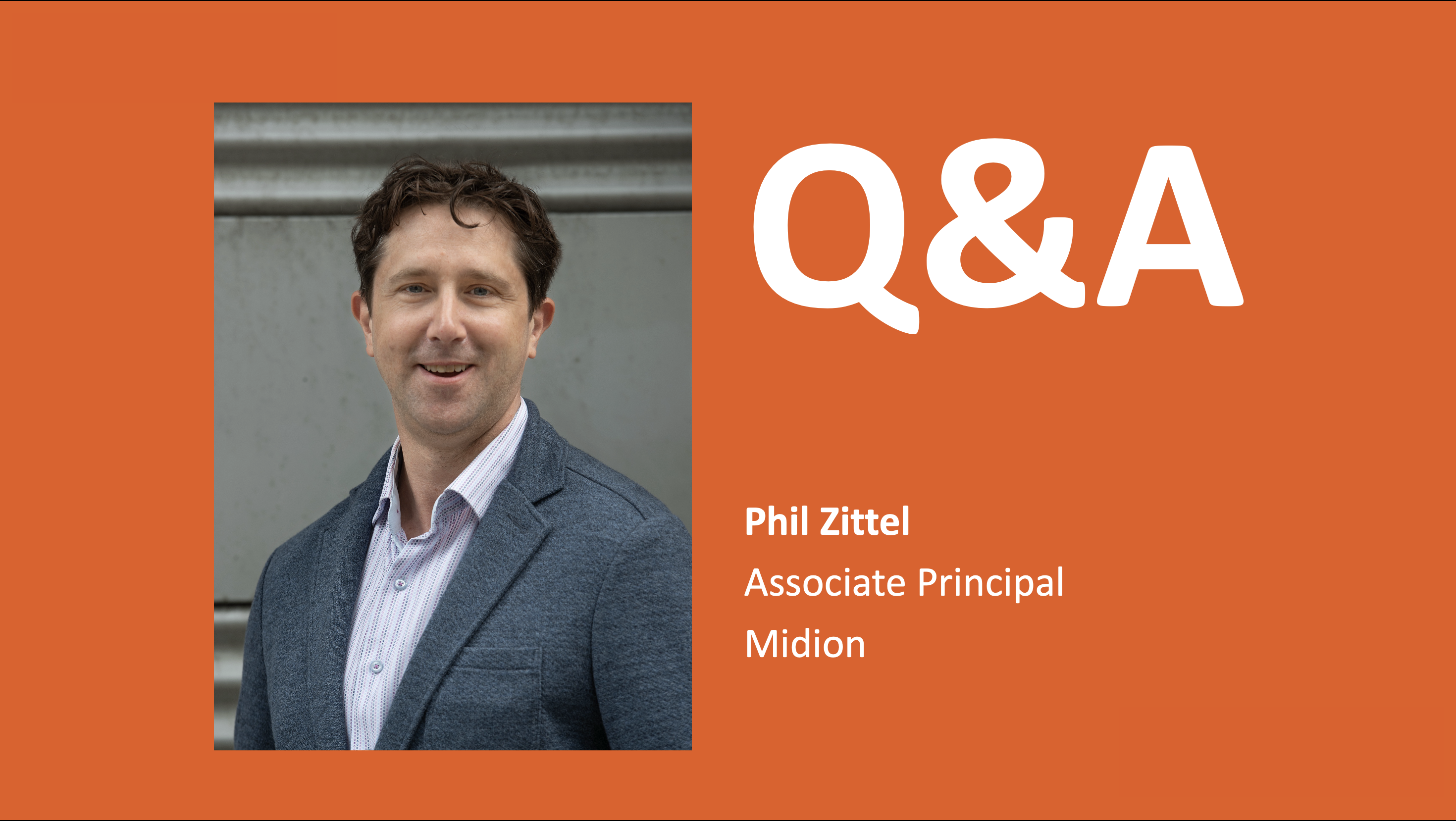
Q&A: Phil Zittel, Midion

Background
I’m an architect by training, but early in my career I transitioned into the general contracting world through VDC (Virtual Design& Construction). That’s where I was introduced to Lean practices and got involved in operational excellence work—facilitating value stream mapping and improvement events. I later moved into modular construction, which allowed me to blend architecture, VDC, and Lean in a hands-on way. After a couple of years, I joined Midion, where I now coach teams across the country on implementing Lean, with a focus on human-centered practices.
Q: What is your familiarity with the Last Planner System?
I first used LPS while working in VDC and later coached teams on it internally when I was at a GC. Now, at Midion, I coach others in the field as part of our broader Lean approach.
Q: What do you feel like the benefits and limits of LPS are?
The biggest benefits of LPS are the shift toward reliable workflow, better team buy-in, and a stronger sense of commitment across trade partners. It moves the project from a siloed, individual approach to a more collaborative one—and that improves both results and culture.
That said, LPS only works if people truly engage with it.There are ways to “game the system,” where teams go through the motions without changing how they actually work. The system itself isn’t enough—you have to support it with cultural change and real buy-in. Otherwise, people fall back into traditional ways of thinking.
Q: How have you experienced Midion going beyond LPS using human dynamics?
At Midion, we meet people where they are in their careers and their learning journeys. We don’t assume change will happen overnight, and we don’t take a one-size-fits-all approach. We’re intentional with the language we use and how we coach—because words matter. Using commitment-based language and helping people understand the impact of their words and actions is a big part of what we do. It’s about supporting growth at the pace people can absorb and apply it.
Q: What advice do you have for other leaders looking to implement LPS?
Be patient. Change takes time, but it pays off. Invest in your trade partners and your internal team by giving them real coaching—not just training. Communicate clearly why LPS matters and set the tone with your own behavior. And above all, stay curious. Ask questions with genuine interest instead of judgment. That mindset shift is where real transformation begins.



Background
I’m an architect by training, but early in my career I transitioned into the general contracting world through VDC (Virtual Design& Construction). That’s where I was introduced to Lean practices and got involved in operational excellence work—facilitating value stream mapping and improvement events. I later moved into modular construction, which allowed me to blend architecture, VDC, and Lean in a hands-on way. After a couple of years, I joined Midion, where I now coach teams across the country on implementing Lean, with a focus on human-centered practices.
Q: What is your familiarity with the Last Planner System?
I first used LPS while working in VDC and later coached teams on it internally when I was at a GC. Now, at Midion, I coach others in the field as part of our broader Lean approach.
Q: What do you feel like the benefits and limits of LPS are?
The biggest benefits of LPS are the shift toward reliable workflow, better team buy-in, and a stronger sense of commitment across trade partners. It moves the project from a siloed, individual approach to a more collaborative one—and that improves both results and culture.
That said, LPS only works if people truly engage with it.There are ways to “game the system,” where teams go through the motions without changing how they actually work. The system itself isn’t enough—you have to support it with cultural change and real buy-in. Otherwise, people fall back into traditional ways of thinking.
Q: How have you experienced Midion going beyond LPS using human dynamics?
At Midion, we meet people where they are in their careers and their learning journeys. We don’t assume change will happen overnight, and we don’t take a one-size-fits-all approach. We’re intentional with the language we use and how we coach—because words matter. Using commitment-based language and helping people understand the impact of their words and actions is a big part of what we do. It’s about supporting growth at the pace people can absorb and apply it.
Q: What advice do you have for other leaders looking to implement LPS?
Be patient. Change takes time, but it pays off. Invest in your trade partners and your internal team by giving them real coaching—not just training. Communicate clearly why LPS matters and set the tone with your own behavior. And above all, stay curious. Ask questions with genuine interest instead of judgment. That mindset shift is where real transformation begins.



Background
I’m an architect by training, but early in my career I transitioned into the general contracting world through VDC (Virtual Design& Construction). That’s where I was introduced to Lean practices and got involved in operational excellence work—facilitating value stream mapping and improvement events. I later moved into modular construction, which allowed me to blend architecture, VDC, and Lean in a hands-on way. After a couple of years, I joined Midion, where I now coach teams across the country on implementing Lean, with a focus on human-centered practices.
Q: What is your familiarity with the Last Planner System?
I first used LPS while working in VDC and later coached teams on it internally when I was at a GC. Now, at Midion, I coach others in the field as part of our broader Lean approach.
Q: What do you feel like the benefits and limits of LPS are?
The biggest benefits of LPS are the shift toward reliable workflow, better team buy-in, and a stronger sense of commitment across trade partners. It moves the project from a siloed, individual approach to a more collaborative one—and that improves both results and culture.
That said, LPS only works if people truly engage with it.There are ways to “game the system,” where teams go through the motions without changing how they actually work. The system itself isn’t enough—you have to support it with cultural change and real buy-in. Otherwise, people fall back into traditional ways of thinking.
Q: How have you experienced Midion going beyond LPS using human dynamics?
At Midion, we meet people where they are in their careers and their learning journeys. We don’t assume change will happen overnight, and we don’t take a one-size-fits-all approach. We’re intentional with the language we use and how we coach—because words matter. Using commitment-based language and helping people understand the impact of their words and actions is a big part of what we do. It’s about supporting growth at the pace people can absorb and apply it.
Q: What advice do you have for other leaders looking to implement LPS?
Be patient. Change takes time, but it pays off. Invest in your trade partners and your internal team by giving them real coaching—not just training. Communicate clearly why LPS matters and set the tone with your own behavior. And above all, stay curious. Ask questions with genuine interest instead of judgment. That mindset shift is where real transformation begins.


Background
I’m an architect by training, but early in my career I transitioned into the general contracting world through VDC (Virtual Design& Construction). That’s where I was introduced to Lean practices and got involved in operational excellence work—facilitating value stream mapping and improvement events. I later moved into modular construction, which allowed me to blend architecture, VDC, and Lean in a hands-on way. After a couple of years, I joined Midion, where I now coach teams across the country on implementing Lean, with a focus on human-centered practices.
Q: What is your familiarity with the Last Planner System?
I first used LPS while working in VDC and later coached teams on it internally when I was at a GC. Now, at Midion, I coach others in the field as part of our broader Lean approach.
Q: What do you feel like the benefits and limits of LPS are?
The biggest benefits of LPS are the shift toward reliable workflow, better team buy-in, and a stronger sense of commitment across trade partners. It moves the project from a siloed, individual approach to a more collaborative one—and that improves both results and culture.
That said, LPS only works if people truly engage with it.There are ways to “game the system,” where teams go through the motions without changing how they actually work. The system itself isn’t enough—you have to support it with cultural change and real buy-in. Otherwise, people fall back into traditional ways of thinking.
Q: How have you experienced Midion going beyond LPS using human dynamics?
At Midion, we meet people where they are in their careers and their learning journeys. We don’t assume change will happen overnight, and we don’t take a one-size-fits-all approach. We’re intentional with the language we use and how we coach—because words matter. Using commitment-based language and helping people understand the impact of their words and actions is a big part of what we do. It’s about supporting growth at the pace people can absorb and apply it.
Q: What advice do you have for other leaders looking to implement LPS?
Be patient. Change takes time, but it pays off. Invest in your trade partners and your internal team by giving them real coaching—not just training. Communicate clearly why LPS matters and set the tone with your own behavior. And above all, stay curious. Ask questions with genuine interest instead of judgment. That mindset shift is where real transformation begins.



Q&A: Phil Zittel, Midion
Background
I’m an architect by training, but early in my career I transitioned into the general contracting world through VDC (Virtual Design& Construction). That’s where I was introduced to Lean practices and got involved in operational excellence work—facilitating value stream mapping and improvement events. I later moved into modular construction, which allowed me to blend architecture, VDC, and Lean in a hands-on way. After a couple of years, I joined Midion, where I now coach teams across the country on implementing Lean, with a focus on human-centered practices.
Q: What is your familiarity with the Last Planner System?
I first used LPS while working in VDC and later coached teams on it internally when I was at a GC. Now, at Midion, I coach others in the field as part of our broader Lean approach.
Q: What do you feel like the benefits and limits of LPS are?
The biggest benefits of LPS are the shift toward reliable workflow, better team buy-in, and a stronger sense of commitment across trade partners. It moves the project from a siloed, individual approach to a more collaborative one—and that improves both results and culture.
That said, LPS only works if people truly engage with it.There are ways to “game the system,” where teams go through the motions without changing how they actually work. The system itself isn’t enough—you have to support it with cultural change and real buy-in. Otherwise, people fall back into traditional ways of thinking.
Q: How have you experienced Midion going beyond LPS using human dynamics?
At Midion, we meet people where they are in their careers and their learning journeys. We don’t assume change will happen overnight, and we don’t take a one-size-fits-all approach. We’re intentional with the language we use and how we coach—because words matter. Using commitment-based language and helping people understand the impact of their words and actions is a big part of what we do. It’s about supporting growth at the pace people can absorb and apply it.
Q: What advice do you have for other leaders looking to implement LPS?
Be patient. Change takes time, but it pays off. Invest in your trade partners and your internal team by giving them real coaching—not just training. Communicate clearly why LPS matters and set the tone with your own behavior. And above all, stay curious. Ask questions with genuine interest instead of judgment. That mindset shift is where real transformation begins.
Q&A: Phil Zittel, Midion
Background
I’m an architect by training, but early in my career I transitioned into the general contracting world through VDC (Virtual Design& Construction). That’s where I was introduced to Lean practices and got involved in operational excellence work—facilitating value stream mapping and improvement events. I later moved into modular construction, which allowed me to blend architecture, VDC, and Lean in a hands-on way. After a couple of years, I joined Midion, where I now coach teams across the country on implementing Lean, with a focus on human-centered practices.
Q: What is your familiarity with the Last Planner System?
I first used LPS while working in VDC and later coached teams on it internally when I was at a GC. Now, at Midion, I coach others in the field as part of our broader Lean approach.
Q: What do you feel like the benefits and limits of LPS are?
The biggest benefits of LPS are the shift toward reliable workflow, better team buy-in, and a stronger sense of commitment across trade partners. It moves the project from a siloed, individual approach to a more collaborative one—and that improves both results and culture.
That said, LPS only works if people truly engage with it.There are ways to “game the system,” where teams go through the motions without changing how they actually work. The system itself isn’t enough—you have to support it with cultural change and real buy-in. Otherwise, people fall back into traditional ways of thinking.
Q: How have you experienced Midion going beyond LPS using human dynamics?
At Midion, we meet people where they are in their careers and their learning journeys. We don’t assume change will happen overnight, and we don’t take a one-size-fits-all approach. We’re intentional with the language we use and how we coach—because words matter. Using commitment-based language and helping people understand the impact of their words and actions is a big part of what we do. It’s about supporting growth at the pace people can absorb and apply it.
Q: What advice do you have for other leaders looking to implement LPS?
Be patient. Change takes time, but it pays off. Invest in your trade partners and your internal team by giving them real coaching—not just training. Communicate clearly why LPS matters and set the tone with your own behavior. And above all, stay curious. Ask questions with genuine interest instead of judgment. That mindset shift is where real transformation begins.
Background
I’m an architect by training, but early in my career I transitioned into the general contracting world through VDC (Virtual Design& Construction). That’s where I was introduced to Lean practices and got involved in operational excellence work—facilitating value stream mapping and improvement events. I later moved into modular construction, which allowed me to blend architecture, VDC, and Lean in a hands-on way. After a couple of years, I joined Midion, where I now coach teams across the country on implementing Lean, with a focus on human-centered practices.
Q: What is your familiarity with the Last Planner System?
I first used LPS while working in VDC and later coached teams on it internally when I was at a GC. Now, at Midion, I coach others in the field as part of our broader Lean approach.
Q: What do you feel like the benefits and limits of LPS are?
The biggest benefits of LPS are the shift toward reliable workflow, better team buy-in, and a stronger sense of commitment across trade partners. It moves the project from a siloed, individual approach to a more collaborative one—and that improves both results and culture.
That said, LPS only works if people truly engage with it.There are ways to “game the system,” where teams go through the motions without changing how they actually work. The system itself isn’t enough—you have to support it with cultural change and real buy-in. Otherwise, people fall back into traditional ways of thinking.
Q: How have you experienced Midion going beyond LPS using human dynamics?
At Midion, we meet people where they are in their careers and their learning journeys. We don’t assume change will happen overnight, and we don’t take a one-size-fits-all approach. We’re intentional with the language we use and how we coach—because words matter. Using commitment-based language and helping people understand the impact of their words and actions is a big part of what we do. It’s about supporting growth at the pace people can absorb and apply it.
Q: What advice do you have for other leaders looking to implement LPS?
Be patient. Change takes time, but it pays off. Invest in your trade partners and your internal team by giving them real coaching—not just training. Communicate clearly why LPS matters and set the tone with your own behavior. And above all, stay curious. Ask questions with genuine interest instead of judgment. That mindset shift is where real transformation begins.
Background
I’m an architect by training, but early in my career I transitioned into the general contracting world through VDC (Virtual Design& Construction). That’s where I was introduced to Lean practices and got involved in operational excellence work—facilitating value stream mapping and improvement events. I later moved into modular construction, which allowed me to blend architecture, VDC, and Lean in a hands-on way. After a couple of years, I joined Midion, where I now coach teams across the country on implementing Lean, with a focus on human-centered practices.
Q: What is your familiarity with the Last Planner System?
I first used LPS while working in VDC and later coached teams on it internally when I was at a GC. Now, at Midion, I coach others in the field as part of our broader Lean approach.
Q: What do you feel like the benefits and limits of LPS are?
The biggest benefits of LPS are the shift toward reliable workflow, better team buy-in, and a stronger sense of commitment across trade partners. It moves the project from a siloed, individual approach to a more collaborative one—and that improves both results and culture.
That said, LPS only works if people truly engage with it.There are ways to “game the system,” where teams go through the motions without changing how they actually work. The system itself isn’t enough—you have to support it with cultural change and real buy-in. Otherwise, people fall back into traditional ways of thinking.
Q: How have you experienced Midion going beyond LPS using human dynamics?
At Midion, we meet people where they are in their careers and their learning journeys. We don’t assume change will happen overnight, and we don’t take a one-size-fits-all approach. We’re intentional with the language we use and how we coach—because words matter. Using commitment-based language and helping people understand the impact of their words and actions is a big part of what we do. It’s about supporting growth at the pace people can absorb and apply it.
Q: What advice do you have for other leaders looking to implement LPS?
Be patient. Change takes time, but it pays off. Invest in your trade partners and your internal team by giving them real coaching—not just training. Communicate clearly why LPS matters and set the tone with your own behavior. And above all, stay curious. Ask questions with genuine interest instead of judgment. That mindset shift is where real transformation begins.
Background
I’m an architect by training, but early in my career I transitioned into the general contracting world through VDC (Virtual Design& Construction). That’s where I was introduced to Lean practices and got involved in operational excellence work—facilitating value stream mapping and improvement events. I later moved into modular construction, which allowed me to blend architecture, VDC, and Lean in a hands-on way. After a couple of years, I joined Midion, where I now coach teams across the country on implementing Lean, with a focus on human-centered practices.
Q: What is your familiarity with the Last Planner System?
I first used LPS while working in VDC and later coached teams on it internally when I was at a GC. Now, at Midion, I coach others in the field as part of our broader Lean approach.
Q: What do you feel like the benefits and limits of LPS are?
The biggest benefits of LPS are the shift toward reliable workflow, better team buy-in, and a stronger sense of commitment across trade partners. It moves the project from a siloed, individual approach to a more collaborative one—and that improves both results and culture.
That said, LPS only works if people truly engage with it.There are ways to “game the system,” where teams go through the motions without changing how they actually work. The system itself isn’t enough—you have to support it with cultural change and real buy-in. Otherwise, people fall back into traditional ways of thinking.
Q: How have you experienced Midion going beyond LPS using human dynamics?
At Midion, we meet people where they are in their careers and their learning journeys. We don’t assume change will happen overnight, and we don’t take a one-size-fits-all approach. We’re intentional with the language we use and how we coach—because words matter. Using commitment-based language and helping people understand the impact of their words and actions is a big part of what we do. It’s about supporting growth at the pace people can absorb and apply it.
Q: What advice do you have for other leaders looking to implement LPS?
Be patient. Change takes time, but it pays off. Invest in your trade partners and your internal team by giving them real coaching—not just training. Communicate clearly why LPS matters and set the tone with your own behavior. And above all, stay curious. Ask questions with genuine interest instead of judgment. That mindset shift is where real transformation begins.

